

Colin Wheeler
In 1948, Britain’s railways were nationalised as British Railways, operating through a centrally managed organisation of regions and divisions responsible for train operations, infrastructure and rolling stock. Its distinctive logo became widely recognised.
During the Thatcher era, reforms began to restructure the railway. Railtrack was established to manage infrastructure, including track, signalling and electrification, while train operations and maintenance were increasingly delivered by separate organisations. Railtrack was later replaced by Network Rail, with zonal management adopted as part of the evolving structure.
Responsibility for railway safety regulation also changed. The Office of Rail and Road (ORR) became responsible for safety policy and management, taking over functions previously undertaken by Her Majesty’s Railway Inspectorate (HMRI). HMRI had responded to the Health and Safety at Work Act by introducing geographically based inspectors responsible for monitoring safe working practices and investigating incidents, some of which resulted in prosecutions, injuries and damage to trains and infrastructure.
The 2003 Railways (Accident Investigation and Reporting) Regulations also had significant implications for railway safety management. Following the Ladbroke Grove rail crash in 1999, Lord Cullen chaired a public inquiry examining the accident, previous incidents, safety management, and the effectiveness of the existing regulatory framework.
The Rail Accident Investigation Branch (RAIB) was subsequently established in 2005. Its website is open to all as specified in the investigation and reporting regulations. Its latest reports and briefs are summarised here:
Fatal collision at Elstow
At around 17: 15 on 19 June two passenger trains collided near Elstow, Bedfordshire. The East Midland Corby to London St Pancras train collided with the 15:50 service from Nottingham also destined for London St Pancras. The incident occurred on the Midland Main line approximately two and a half miles south of Bedford Station. The driver of the Corby to St Pancras train was killed and 162 people were injured, with 102 requiring hospital treatment.
RAIB was notified at 17:27 and its first inspector arrived at the site at 18:26. There are four tracks at the site, Up and Down Fasts, and Up and Down Slows. The collision occurred on the Up Fast on the approach to signal WH 152. The initial information we have states that the first train stopped unexpectedly and the second train passed a red signal.
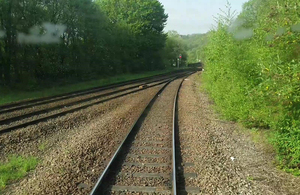
RAIB’s investigation will seek to identify the sequence of events which led to the accident. It will include consideration of: the actions of those involved and any factors that may have influenced them; the status and performance of the braking, AWS, and other safety systems on train 1H46; the reason train 1B67 stopped; and the status of signal WH154 and its AWS equipment, as well as its positioning, visibility, and conspicuity.
In addition, it will examine the crashworthiness performance of both trains during the collision; the emergency response to the accident; the processes used to assess the risk of overrun at this location, and the effectiveness of any control measures intended to address this; and any relevant underlying factors, including any actions taken in response to previous relevant safety recommendations.
Near miss with trackworkers
Described as a “dangerous occurrence” this incident occurred at Todmorden on 6 May at around 22:28 hours. The train driver of the out of service passenger train was granted permission by the signaller to move closer to the signal on Todmorden West curve. The driver was unaware that the train was already standing with its cab beyond the signal. The train made an uncontrolled movement towards Todmorden Viaduct Junction.
Realising what had happened, the driver brought the train to a stop clear of the junction. Twelve seconds later the 2157 Manchester to Leeds passenger service passed through the junction at 45mph. There were no injuries or damage.
Redbridge collision investigation
RAIB is investigating the collision of a passenger train with a rail grinding machine on 19 May.
The rail grinding machine had been left on the track near Redbridge Junction on track between Romsey and the junction. It was struck by the first train of the day at around 06:17. The machine was destroyed but no injuries were caused. The train was damaged but not derailed.
Queens Park trolley collision
This accident occurred at 05:35 on 9 May at Queens Park in London and involved a passenger train travelling at 77mph that collided with two rail handling trolleys. The trolleys had been left behind on the track following overnight engineering works. There were no injuries to either passengers or staff. The trolleys were damaged beyond repair. The train was damaged and unable to continue in service. RAIB has advised that it will issue a Safety Digest.
Level crossing fatality
This fatal accident took place at Houghton automatic half barrier level crossing at 07:51 on 25 June, resulting in the death of the female car driver and serious injuries to the eight-year-old passenger in the car.
RAIB has advised that “the half barriers were unexpectedly raised and warning lights were not active as the train approached on a green signal”. The immediate cause of this accident is evident, but I anticipate it will and must result in recommendations to ensure there is no repeat and may even result in urgent and radical action nationwide.
Staniforth Road crossing
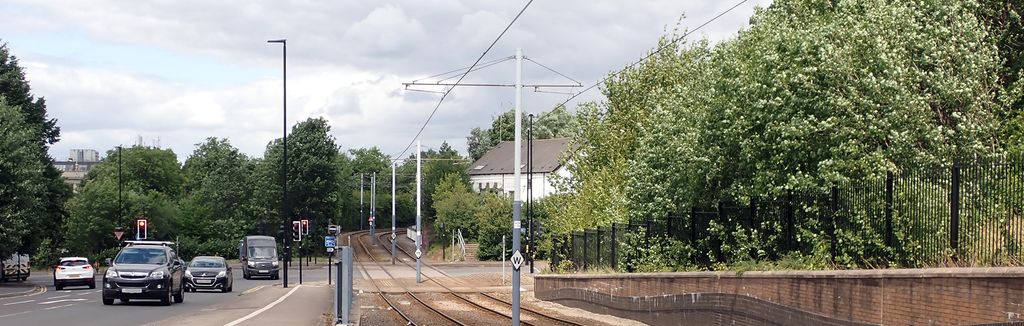
A South Yorkshire Supertram collided with two pedestrians at Staniforth Road footpath crossing in Sheffield on 22 June 2025. The tram was travelling at approximately 17mph. Both pedestrians were taken to hospital, with one sustaining serious injuries and the other minor injuries.
RAIB has found that the pedestrians were unaware of the approaching tram and were not adequately alerted by its audible warnings. The crossing layout and signage also failed to effectively highlight the risk. RAIB has made three recommendations covering risk assessment, consistent use of audible warnings, and a wider review of pedestrian crossings across the network.
Our railways deserve better
I welcome the decision to take our railways back into public ownership and operation. There have recently been far too many accidents on track involving fatalities to rail staff, travellers, and the general public.
Recent events have shocked many and there is a need to redouble safety awareness especially as public ownership is progressed. Renationalisation provides a great opportunity to make our already safe railways even safer.
Image credit: RAIB