

The scale of HS2’s recruitment ambitions is increasingly being matched by the breadth of opportunities emerging around the project.
From dedicated recruitment hubs designed to connect local people with major infrastructure schemes, to specialist apprenticeships tackling some of construction’s most persistent skills shortages, HS2 continues to demonstrate how a major railway project can create employment pathways well beyond the tracks themselves.
That approach is particularly visible in west London, where HS2 has recently joined forces with the Department for Work and Pensions (DWP) to establish a dedicated Recruitment Hub at Acton Jobcentre Plus. Opening its doors on 30 June, the facility is intended to act as a one-stop shop for people looking for employment and training opportunities connected to HS2, as well as the wider programme of infrastructure and regeneration taking shape around Old Oak Common.
Around 30,000 people are currently helping to build HS2, while more than 2,000 have secured apprenticeships on the project. More than 5,000 people who were previously unemployed have also received support to begin new careers. These numbers demonstrate the employment impact of a project that is still some years away from entering its operational phase. They also highlight an important question for the project: how can those opportunities be translated into lasting skills and careers for the communities along its route? The answer increasingly appears to be through partnerships.
Local opportunities
At Acton, west London, the DWP is working alongside HS2 and local authority partners, as well as the Old Oak and Park Royal Development Corporation (OPDC), Places for London, and the National Careers Service. The aim is not simply to fill vacancies, but to provide local people with access to training, upskilling, and information about the growing number of opportunities being created by this major infrastructure investment.
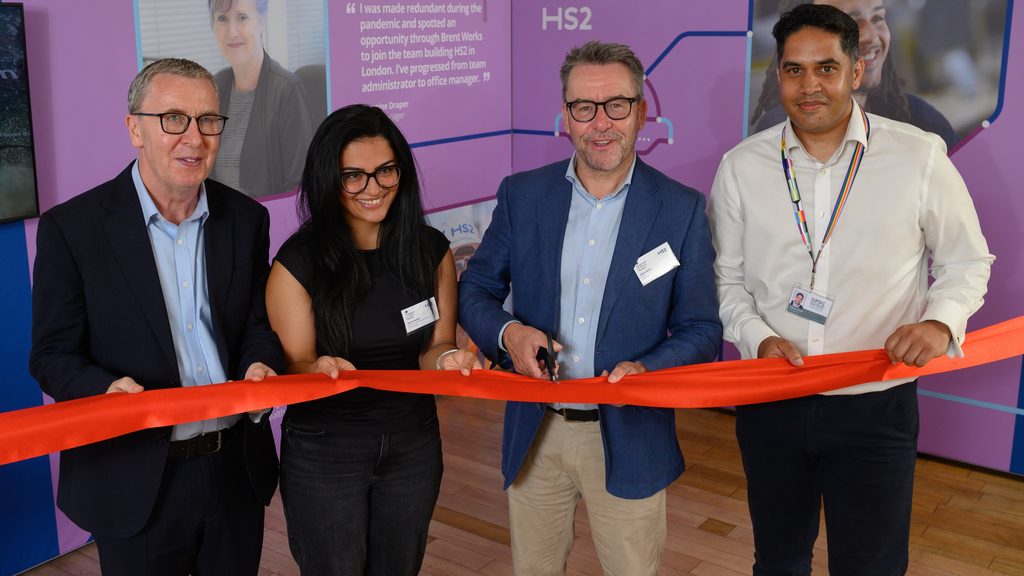
HS2 Chief Executive Mark Wild says the hub will allow local people to play a part in shaping the west London district, whether through direct employment on HS2 or through other major projects.
“We’re building one the UK’s biggest and best-connected railway stations at Old Oak Common, and that investment has already led to thousands of jobs being created,” he commented.
“Huge regeneration projects are transforming the area around the station site, and the number of new homes and commercial premises being built is spearheading even more new career opportunities.
“The recruitment hub will create a one-stop shop for local people who want to play a part in shaping this new west London district, whether working directly on HS2, or other major projects that form part of the Old Oak, and Park Royal Development Corporation’s Old Oak illustrative masterplan and Places for London’s regeneration plans.”
That wider perspective is important. HS2’s construction programme is acting as a catalyst for development around Old Oak Common, with the station at the centre of a planned regeneration programme expected to deliver significant economic benefits.
HS2 estimates that the arrival of the railway in west London will contribute £10 billion to the local economy over the next decade. OPDC’s regeneration plans cover 650 hectares across parts of Brent, Ealing, and Hammersmith & Fulham, with up to 11,000 new jobs and more than 8,000 homes planned.
The recruitment hub therefore sits between two major employment stories: the construction of HS2 itself and the broader regeneration it is helping to unlock.
Routes into work
The value of that approach is perhaps best illustrated by the experience of East Acton resident Nazia Hashim.
Nazia hadn’t previously considered a career in construction, but after being made redundant during the pandemic she began looking at new opportunities and eventually secured a role with HS2 construction partner Skanska Costain STRABAG joint venture (SCS JV). Starting in business administration, she is now an assistant quantity surveyor helping ensure that the project has the skilled workforce required to construct the tunnels connecting Old Oak Common and Euston.
It’s this kind of progression that gives recruitment initiatives on major infrastructure projects their longer-term significance. The objective isn’t simply to move people into work, but to provide routes into professions that can support them long after a particular construction package has finished. That consideration is becoming increasingly important as HS2 moves through different phases of delivery.
The project forecasts that its civil engineering works will conclude in around four years, after which track, signalling, and communications systems will be installed before dynamic testing and trial operations begin. Each phase will require different capabilities, creating the potential for new employment opportunities as the project evolves.
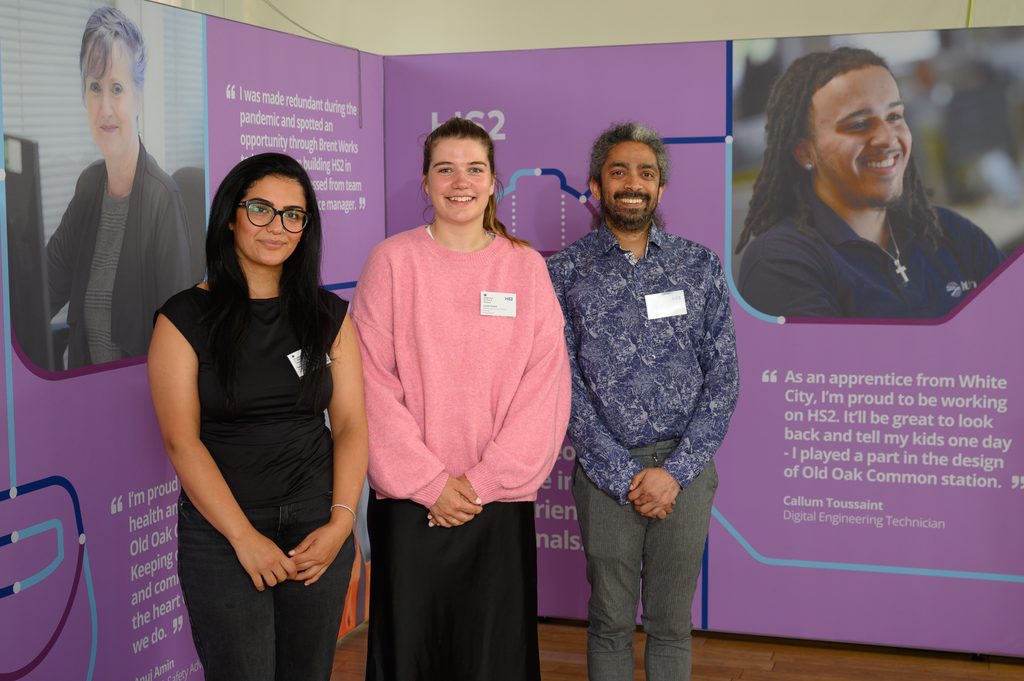
For local communities, that means the skills required today may not necessarily be the skills required tomorrow. Recruitment and training therefore need to evolve alongside the railway.
The Acton hub is designed with that longer-term picture in mind. OPDC staff will be based there once a month to help job seekers access emerging opportunities, while the DWP sees the facility as a resource for people at different stages of their careers.
Michael Morley, DWP’s director for jobcentres in London, says the hub will be particularly valuable for young Londoners navigating the transition between education, employment, and training.
There is also a recognition that HS2’s employment impact extends beyond the immediate construction workforce. As Old Oak Common and the surrounding area develop, opportunities will emerge across construction, engineering, transport, property and other sectors. The recruitment hub is therefore as much about building connections as filling jobs.
That philosophy is also evident further north, where HS2’s employment programme is being used to address a very specific skills shortage.
Closing the skills gap
In the West Midlands, a new cohort of 10 welding operative apprentices has joined HS2 to work on the Curzon approaches – a series of viaducts forming the final mile of the journey into Birmingham’s Curzon Street Station.
The apprenticeships have been created by Balfour Beatty VINCI (BBV), HS2’s construction partner in the West Midlands, working with supply chain partners Martifer and AA Euro.
The rationale is straightforward: qualified welders are in short supply, and major infrastructure projects require a steady pipeline of people with specialist technical skills. Rather than attempting to source an already-established workforce, the partners have created a route to develop the skills themselves.
The vacancies were advertised through Jobcentre Plus sites across the region, including the dedicated HS2 Recruitment Hub at Washwood Heath. That ensured local unemployed people were given an opportunity to compete for the positions.
Fourteen candidates took part in a 10-day paid work trial as part of the selection process. Those who successfully completed it were offered Level 2 apprenticeships, combining workplace experience with formal study towards an industry-standard welding qualification. It is a relatively small intake, but its significance is considerably larger than the number of positions suggests.
Welding is a highly transferable skill, and those being trained won’t simply be developing capabilities for the current HS2 construction package. They will be building expertise that can be used across future infrastructure projects.
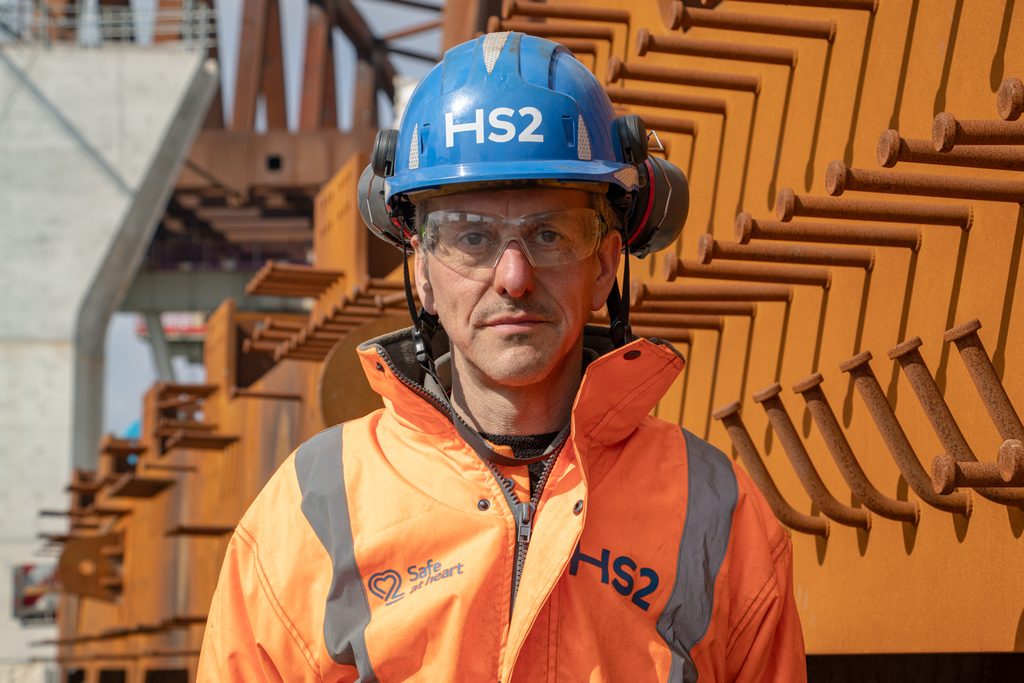
Julie Venn Morton, HS2’s senior skills and inclusion manager for the West Midlands, described welding as a “skill for life”, underlining the broader ambition behind the programme.
The apprentices also demonstrate that there is no single profile for entering a new technical career. Nine of the 10 recruits are under 30, but the oldest is 48. Nine are male and one is female, with the group drawn from Birmingham, Solihull, Walsall, and Stoke-on-Trent.
That diversity of ages is significant. Infrastructure recruitment campaigns often focus heavily on attracting young people into engineering and construction, but career changes later in life can also help address skills shortages.
Andrew Short, 48, was one of six candidates recruited through the Washwood Heath Recruitment Hub. The apprenticeship represents an opportunity to retrain while contributing directly to a project he has watched develop in his home city.
He says: “As a local resident, I’ve witnessed the positive impact HS2 is having in Birmingham. “I don’t just mean the major viaducts that are springing up from the ground. It’s also providing local people with employment and opportunities to learn new skills. I’m one of those people who are benefitting from this iconic project, which I believe will come to define the city.”
In theory and practice
The structure of the welding apprenticeship reflects that emphasis on practical skills.
Walsall-based Performance Through People provides a fortnightly training day, supporting the apprentices with the theoretical element of their qualification. The remainder of their time is spent on site, where they receive coaching and tutor-led support from engineers and welding specialists working on HS2.
This combination of classroom learning and practical experience is well suited to specialist construction roles. The apprentices can see the application of what they are learning while simultaneously gaining experience in a live infrastructure environment. For an industry facing persistent skills shortages, this provides a valuable bridge between formal training and the workplace.
It is also an approach that can make construction careers more tangible to people who may not previously have considered them.
Tyler Moore, 21, discovered the opportunity after attending a careers fair at Walsall Art Gallery. Having completed his A-levels, he initially moved into an office-based role but quickly realised that it was not the right career path. He is now training as a welder on HS2 and says seeing the physical progress of the project has made the work particularly rewarding.
His experience reinforces the importance of exposing potential recruits to the reality of infrastructure careers. Traditional routes into engineering and construction are not necessarily the only routes, and careers events, recruitment hubs, and work trials can provide an opportunity for people to discover roles they might otherwise overlook.
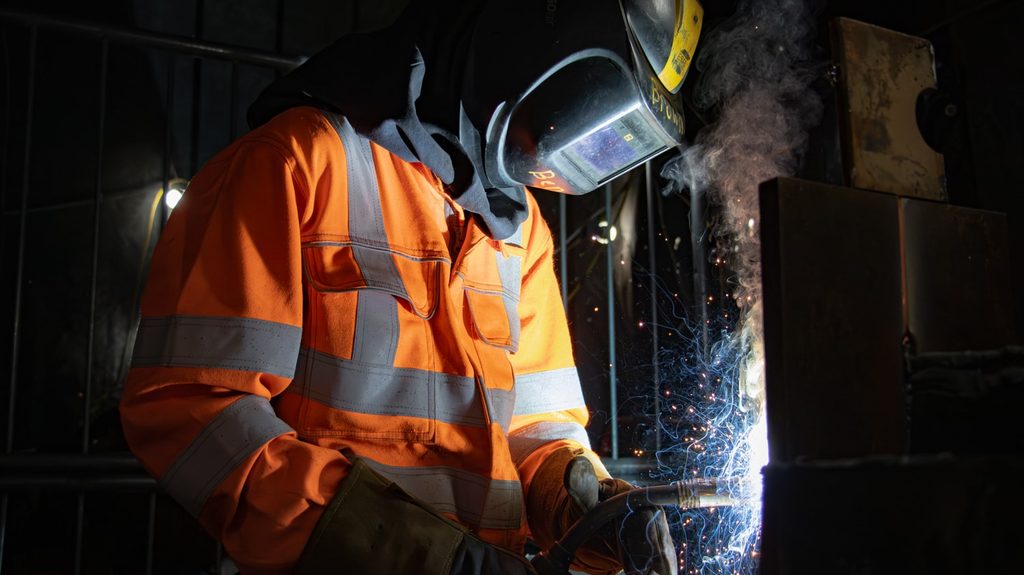
The welding intake also brings the wider West Midlands employment picture into focus. Around 10,000 people are already helping to build HS2 in the region – almost a third of the project’s total workforce. Some 870 people from the region have secured apprenticeships, while 2,214 local residents who were previously unemployed have progressed into new careers.
Those figures demonstrate how employment initiatives can operate at several levels simultaneously: creating immediate jobs, addressing specific technical shortages, and providing people with transferable skills.
The challenge for HS2 is now to maintain that momentum as the project progresses through its next stages.
HS2 has already achieved its original employment and skills targets, including its ambition to create 2,000 apprenticeships and support 5,000 unemployed people into work. With 5,771 formerly unemployed people now having found work on the project, that target has been exceeded. The project is consequently revising its Skills, Employment and Education Strategy, with the intention of ensuring communities along the route continue to benefit from training and career opportunities.
Building a legacy
For all the political and engineering debate surrounding HS2, its employment legacy is becoming an increasingly tangible part of the project’s story.
The numbers are significant, but the more interesting measure may ultimately be what happens to those people once individual construction packages come to an end.
A recruitment hub can help someone find their first opportunity. An apprenticeship can provide a qualification. A work trial can give a potential recruit the confidence to make a career change. The real test is whether those interventions create a workforce capable of moving from one major infrastructure project to the next.
That may prove to be one of the most important measures of HS2’s skills legacy: not simply how many people it employed, but how many careers it helped to start.
Image credit: HS2